Flat-Pack Lockable Steel Storage Cabinet — Powder-Coated Adjustable Shelves for Offices & Schools
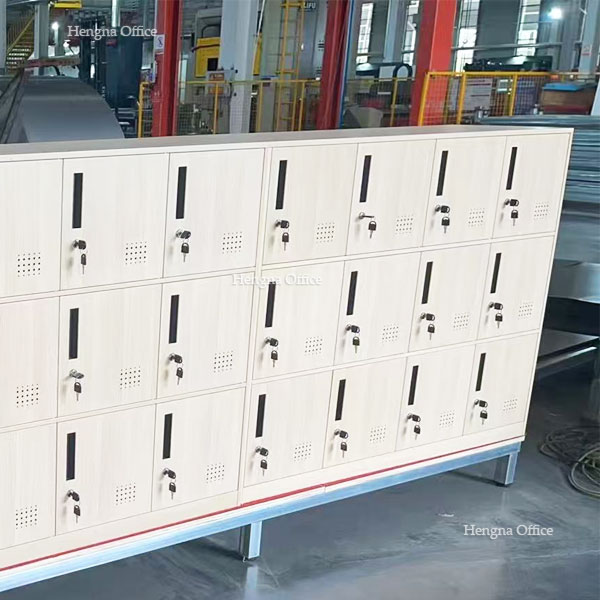
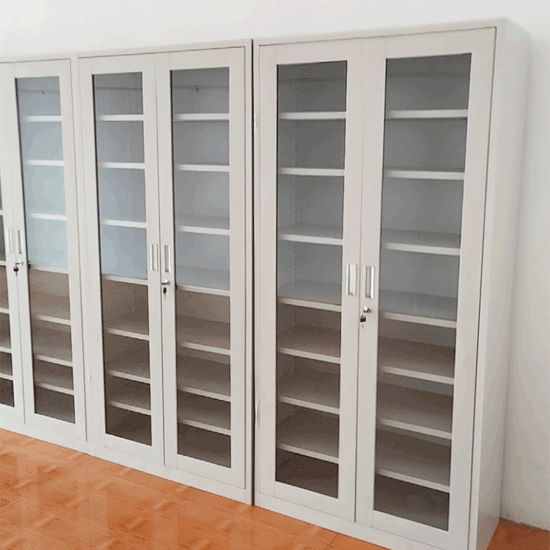
I was helping set up a new teachers’ office last spring when the facilities manager pointed at a flat stack of steel panels and asked, “Is that really a cabinet?” It was. Six doors’ worth of storage, shipped flat in a few boxes, and twenty minutes later it was a wall of lockable cabinets standing in the corner. That moment is why I’m writing this: a lockable steel storage cabinet doesn’t have to arrive assembled, and it doesn’t have to cost what a pre-built unit costs.
This guide covers what a flat-pack lockable steel storage cabinet actually is, how the powder-coated adjustable shelves work, and what to check before you order one for an office, a school, or a staff room. If you’re tired of overpriced assembled cabinets or flimsy shelving that won’t lock, this is the practical version of what to buy instead.
What is a flat-pack lockable steel storage cabinet?
It’s a steel cabinet that ships knocked down — panels, shelves, locks, and hardware in flat boxes — and assembles on site without welding or special tools. When it’s up, you get a proper cabinet: doors, a lock, and adjustable shelves inside. “Flat-pack” describes how it ships, not what you get. You get the same durable steel cabinet you’d expect from a factory-built unit, minus the freight cost of shipping an empty box.
That flat-pack format matters more than most buyers realize. A fully assembled steel cabinet is heavy, bulky, and expensive to ship — you’re paying freight for a lot of air. A flat-pack cabinet folds into a fraction of the volume, ships cheaper, and assembles in minutes. For offices, schools, and any buyer managing freight budgets, the savings are real and immediate.
Why powder-coated adjustable shelves?
Two features separate a good storage cabinet from a frustrating one: the finish and the shelving. Powder coating is a baked-on finish that resists scratches, chips, and rust far better than ordinary paint. In a school or office, cabinets get bumped by carts, trolleys, and careless hands every day. Powder coating keeps the cabinet looking clean long after painted steel would start to flake.
Adjustable shelves matter because your storage changes. One month you’re storing binders and folders, the next it’s spare equipment or classroom supplies. With adjustable shelves, you re-space the levels to fit whatever you’re storing — no fixed heights to work around, no wasted gaps. Lift the shelf to a new slot, and it’s re-positioned in under a minute.
Flat-pack cabinet vs. assembled vs. wood: quick comparison
| Factor | Flat-pack steel cabinet | Assembled steel cabinet | Wood cabinet |
|---|---|---|---|
| Shipping cost | Low — ships flat | High — bulky | Medium |
| Assembly | Minutes, no welding | None needed | Screwdriver, sometimes drill |
| Security | Lockable | Lockable | Often flimsy locks |
| Durability | Powder-coated steel | Steel | Wears, chips, sags |
| Flexibility | Adjustable shelves | Adjustable shelves | Fixed shelves usually |
| Best for | Offices, schools, budget buyers | When you can’t assemble | Light, display use |
My honest take: for an office or school that needs real security and durability without paying inflated freight, a flat-pack lockable steel cabinet is the smart buy. Assembled steel wins only if you genuinely can’t spare time to assemble. Wood I’d skip for anything that needs to lock and hold up to daily use.
How much storage do you actually need?
Before you order, count what you’re storing and how you’ll group it. A single-door cabinet works for one person’s files and supplies. A two-door or multi-door cabinet suits a team, a class, or a shared staff room where several people need locked space. Ask yourself three things: how many users, how much per person, and whether you need big open shelves or many small compartments.
Here’s the sizing logic I use with office managers. A single door covers roughly one workstation’s worth of binders, folders, and spare kit. Double the users and you don’t double the doors — you step up to a multi-door cabinet so each person gets their own locked section instead of fighting over one shared lock. For a classroom, a four-door cabinet gives four sections, which maps cleanly to group storage. Measure one person’s actual volume, multiply by the number of users, and pick the door count that lands closest without wasting space.
- One or two users, files and supplies: a single or double-door cabinet with a few adjustable shelves.
- Classroom or team storage: a multi-door cabinet so several people each get a locked section.
- Mixed items, changing needs: go wider on adjustable shelves and keep the top level flexible.
Get this right and you buy once. Get it wrong and you end up with a cabinet that’s either too small, or full of fixed shelves you can’t reconfigure.
What to check before you order
- Real steel thickness — heavier gauge steel means a sturdier cabinet that won’t flex or bow.
- Powder coating, not painted — confirm it’s baked-on powder coat, which resists rust and scratches.
- Adjustable shelf slots — make sure shelves move to different heights, not fixed positions.
- Lock quality — a solid lock with a key you can replace beats a cheap cam lock that jams.
- Door alignment — check the doors close flush; poorly aligned doors leak dust and look worn fast.
- Flat-pack hardware — confirm all panels, shelves, and clips ship together and assemble without welding.
- Fits your space — measure width, depth, and height against your doorway and floor plan.
A note on security
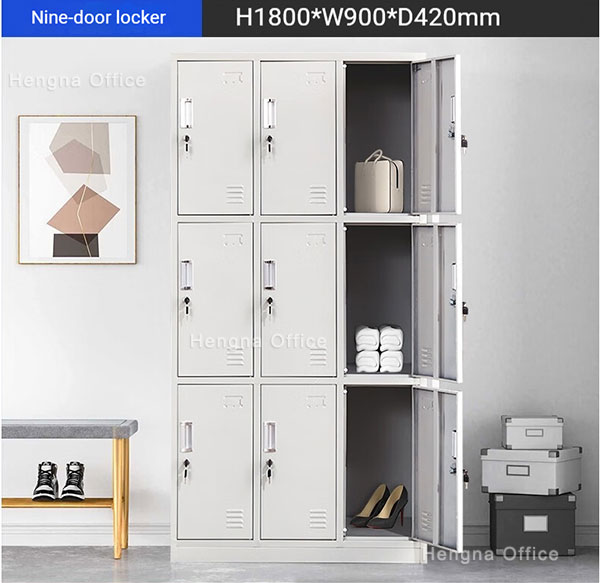
“Lockable” only helps if the lock is worth using. For offices and schools, look for a lock with replaceable keys and a solid strike that the door won’t flex around. A cheap lock that’s easy to force defeats the whole point of a steel cabinet. If the cabinet holds valuable equipment or sensitive documents, spend the small extra on a better lock — it’s the cheapest insurance you’ll buy for a storage cabinet.
FAQ
Is a flat-pack steel cabinet as strong as an assembled one?
Yes, when it’s properly assembled. The panels and hardware are the same steel; flat-pack just changes how it ships and assembles.
Can I adjust the shelves after assembly?
Yes. The shelves move to different slots without tools, so you can reconfigure the cabinet as your storage changes.
Is powder coating better than painted steel?
For durability, yes. Powder coating resists scratches, chips, and rust better than ordinary paint, which matters in busy offices and schools.
Do these cabinets need a lot of floor space?
No more than any cabinet of the same size. Measure your space first, and confirm the cabinet fits your doorway before ordering.
How do I assemble a flat-pack cabinet?
Panels, shelves, and clips arrive flat in boxes. Most units assemble in minutes with basic hand tools, no welding required.
Why buy from us
We manufacture these lockable steel storage cabinets in our own factory in Luoyang, China. That means we control the steel gauge, the powder coating, and the lock hardware from raw sheet to finished unit — and it means flat-pack pricing that works for schools, offices, and wholesale buyers alike. If you’re outfitting a classroom, a staff room, or a whole building, we can quote a unit or a full project.
Measure your space, list what needs to lock, and send it over. We’ll size the cabinet to fit — and ship it flat so the freight doesn’t eat your budget.