Low-Height Anti-Tipping Steel Bookcase for Classrooms — 3-Tier Kid-Safe Shelf, School Safety Rated
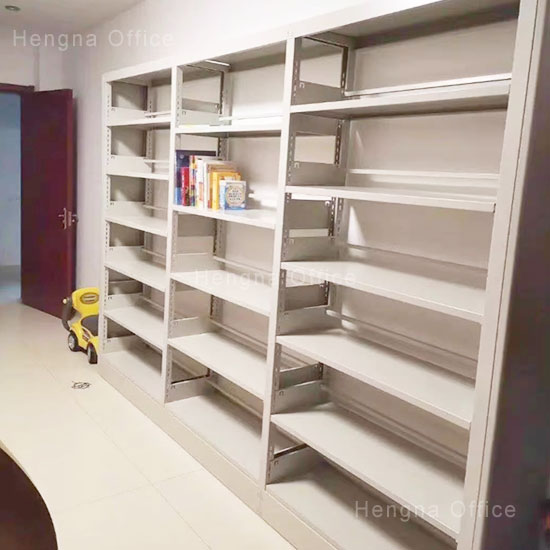
A kindergarten teacher I know once told me about the shelf that nearly fell on a four-year-old. It was a tall, top-heavy bookcase loaded with picture books on the top shelf and nothing on the bottom. A kid reached up, grabbed a book, and the whole unit tipped forward. Nobody was hurt — a nearby adult caught it — but the shelf was gone the next day, and it should have been. That’s the incident that keeps coming back to me when I talk about classroom storage.
This guide is for anyone buying book storage for a classroom, a daycare, a library children’s section, or a kindergarten. It covers why low-height, anti-tipping steel bookcases are the safe choice, how the 3-tier kid-safe design works, and what to check before you order. If you’re outfitting a space where kids reach books, read this before you buy.
Why low height matters in a classroom
The physics is simple: the higher the shelf, the more leverage a child’s pull creates. A tall bookcase full of books on its upper shelves is unstable — the weight sits high, the base is light, and a tug near the top can tip the whole unit. A low-height bookcase keeps the center of gravity down where it belongs, so even a child pulling on a book from the top tier can’t tip it over.
Low height also means every shelf is within a child’s reach. Kids don’t climb shelves to reach high books if the books are already at their level — and not climbing is the single biggest way to prevent shelf accidents. A 3-tier low bookcase puts every book at a height a preschooler or primary student can reach standing on the floor, no step stool, no climbing.
What “anti-tipping” and “kid-safe” really mean
Anti-tipping isn’t just marketing language. It means the bookcase is designed so it won’t tip forward under normal use, and that it can be anchored to the wall for extra security. Look for three things: a low, stable center of gravity from the short design; a wide, solid base that resists rocking; and pre-drilled anchor points so you can secure the unit to the wall with a strap or bracket.
Kid-safe adds two more details. First, rounded corners and edges so a bump against the shelf doesn’t cause a cut. Second, no pinch points — the shelf clips and connections should be smooth and childproof, with nothing a small finger can get caught in. Together these make a bookcase that’s safe to have in a room full of running children.
Steel bookcase vs. wood vs. tall bookcase
| Factor | Low steel bookcase | Wood bookcase | Tall bookcase |
|---|---|---|---|
| Stability | Low center of gravity, anti-tip | Depends on height | Higher tip risk |
| Durability | Steel, won’t chip or warp | Chips, warps over time | Varies |
| Kid reach | All shelves at child height | Depends on height | High shelves out of reach |
| Safety | Rounded edges, anchor points | Sharp corners possible | Higher tip risk, climbing |
| Best for | Classrooms, daycares, kids’ zones | Light display use | Adult storage only |
My honest recommendation: in any room where kids access books, a low, anti-tipping steel bookcase is the right call. Wood has its place for adult display shelves, and tall bookcases are fine in offices, but neither belongs in a classroom where children reach books unsupervised. Steel is durable, stable, and safe — that’s the whole brief.
How many tiers and how to load it safely
A 3-tier low bookcase is the standard for classrooms because it balances storage capacity with reach. Two tiers sometimes isn’t enough for a class library; four starts to push the top shelf back toward climbing height for smaller kids. Three keeps every book reachable while still holding a good number of picture books and readers.
- Load heaviest books low — put bigger, heavier books on the bottom tier to keep the center of gravity low.
- Keep the top tier light — lighter picture books up top, so a pull from a child has less weight behind it.
- Anchor to the wall — use the pre-drilled points to secure the unit, especially in a room with many children.
- Leave some shelf gaps — don’t over-stuff; a full but not jammed shelf is easier for kids to use and less likely to tip when a book is pulled.
Loading a low bookcase correctly matters almost as much as the design. Even a stable unit is only as safe as how it’s loaded and whether it’s anchored. Get both right and you have a bookshelf that survives a classroom full of enthusiastic readers.
What to check before you order
- Height — confirm it’s genuinely low (roughly at or below a young child’s eye level), not a short-name tall shelf.
- Center of gravity and base width — a wide, stable base is the first line of anti-tip protection.
- Anchor points — check there are pre-drilled holes or brackets to secure the unit to a wall.
- Rounded edges — smooth, rounded corners on shelves and frame, no sharp metal.
- No pinch points — clips and joints should be smooth and childproof.
- Steel build — powder-coated steel that won’t chip, warp, or flake like wood or painted metal.
- 3-tier reach — every shelf within reach of a child standing on the floor.
Safety standards and school requirements
Many schools, daycares, and libraries have their own furniture safety rules, and anti-tipping is often part of them. Before you order, check your facility’s requirements: some specify anchor straps, some require low-height units in children’s areas, some ban tall shelving outright in kids’ zones. A low, anti-tipping bookcase with anchor points usually checks every box, but confirm against your own facility’s policy — it’s the difference between compliant and a retrofit later.
Even where there’s no formal standard, the responsible rule is simple: any shelf a child can reach should be low, stable, and anchored. That covers the majority of classroom and library situations without needing to memorize a single regulation.
FAQ
Can a low bookcase still tip over?
Under normal use, a properly loaded low bookcase is very stable because its center of gravity is low. Anchoring it to the wall removes the small remaining risk entirely.
Is a 3-tier bookcase enough storage for a class library?
For most classrooms, yes. Three tiers hold a solid collection of picture books and readers, and every shelf stays at child height.
Do I need to anchor the bookcase?
In any room where children are present, yes. Anchor straps or brackets are cheap insurance against the small chance of a tip-over.
Is steel or wood safer for a classroom bookcase?
Steel is generally safer and more durable — it won’t chip into sharp edges, warp, or crack like wood, and it’s stronger for the same footprint.
Where should heavy books go?
On the bottom tier. Keeping the heaviest books low keeps the center of gravity down and the shelf most stable.
Why buy from us
We manufacture these low-height anti-tipping steel bookcases in our own factory in Luoyang, China. That means we control the steel, the powder coating, the rounded edges, and the anchor points from raw sheet to finished unit — and it means pricing that works for schools, daycares, and libraries buying in quantity. If you’re outfitting a classroom, a children’s library, or a whole school, we can quote a unit or a full project.
Tell us your room size and how many kids need access, and we’ll size the bookcase so every book is reachable — and safe.