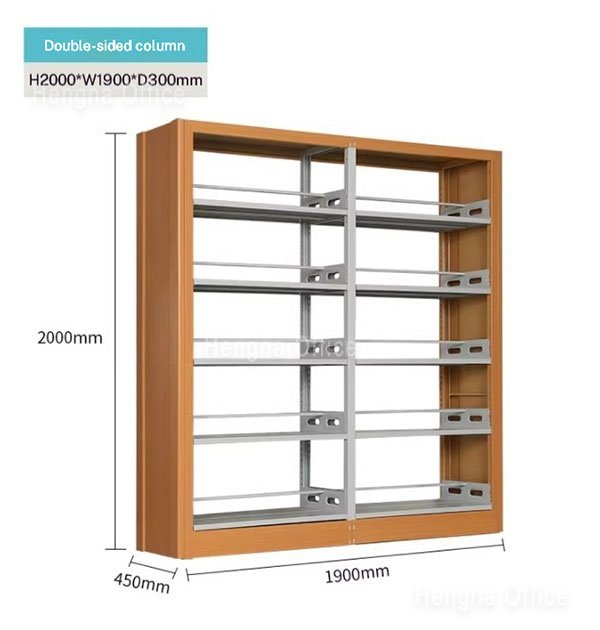
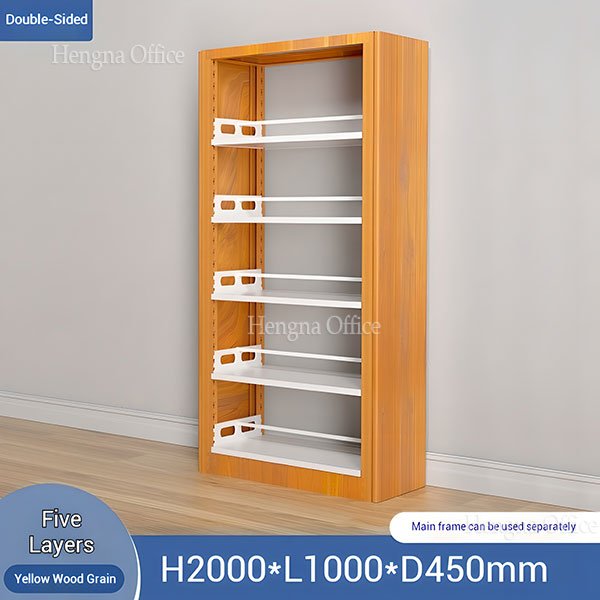
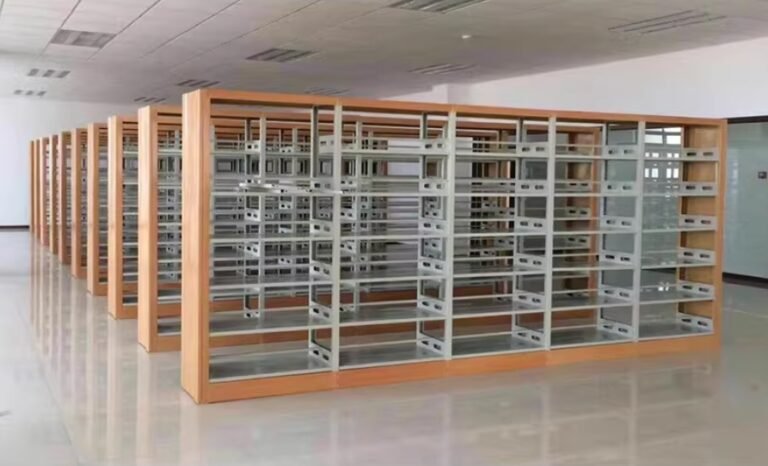
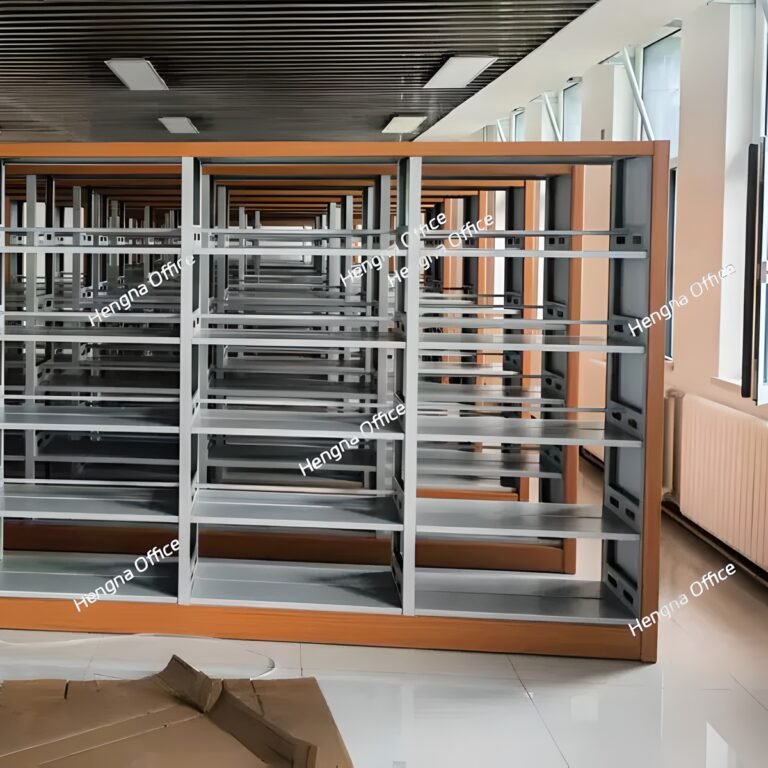
Steel Bookshelf with Wood Grain Coating — Timber Look, 80 kg Steel Strength for Libraries
The Best of Both Materials — If the Coating Is Done Right
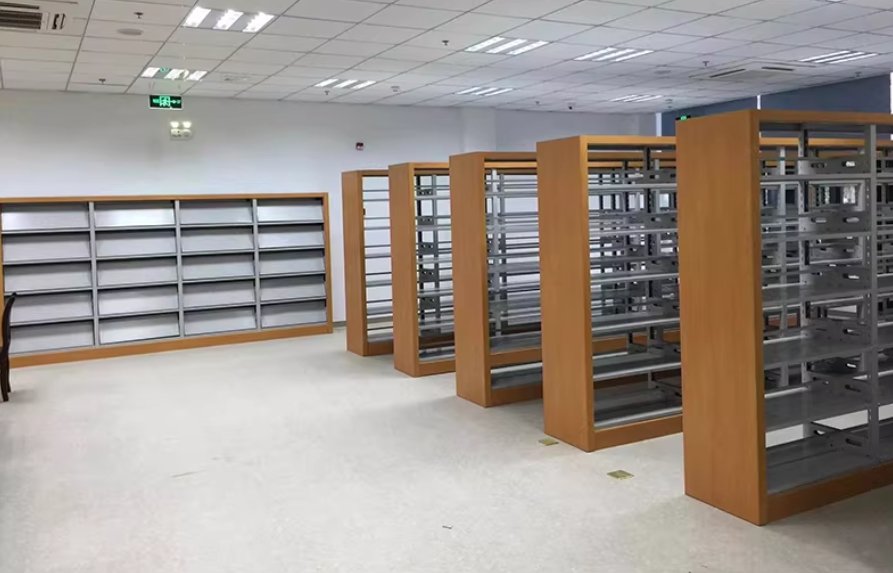
A steel bookshelf with wood grain coating looks like timber and behaves like steel. That’s the pitch. Whether it delivers depends entirely on how the wood finish is applied and what’s underneath it. This article explains the technology, the load numbers, and how to verify a supplier is doing it properly.
The market is full of products that look wood-grain from across a room and peel like a sticker after a year. The difference between those and a durable unit is the coating process, not the pattern.
How Wood Grain Transfer Coating Works
Two processes carry the “wood grain” label, and they’re not equal:
- Transfer printing (the good way): The steel gets a base powder coat, then a printed wood-grain film is transferred onto the surface under heat and pressure, then a clear top coat seals it. The pattern bonds into the coating layers. Scratches down to the steel are rare in normal use, and touch-up is possible with matching paint.
- Sticker laminates (the cheap way): A wood-pattern vinyl film is glued to the steel. It looks convincing at first, then the edges lift, corners peel, and moisture gets under the film. In a library with daily handling, laminate units start showing wear within 12-18 months.
Ask the supplier which process they use. If the answer is “heat transfer printing” or “vacuum transfer coating” with a clear protective layer, the finish will last. If the answer is “laminate,” treat the quote accordingly.
The Load Numbers: Why 80 kg per Shelf Matters
A solid-wood shelf at 18mm thickness carries roughly 40-50 kg per meter before it starts deflecting. That’s fine for paperbacks, marginal for reference collections, and insufficient for archival boxes.
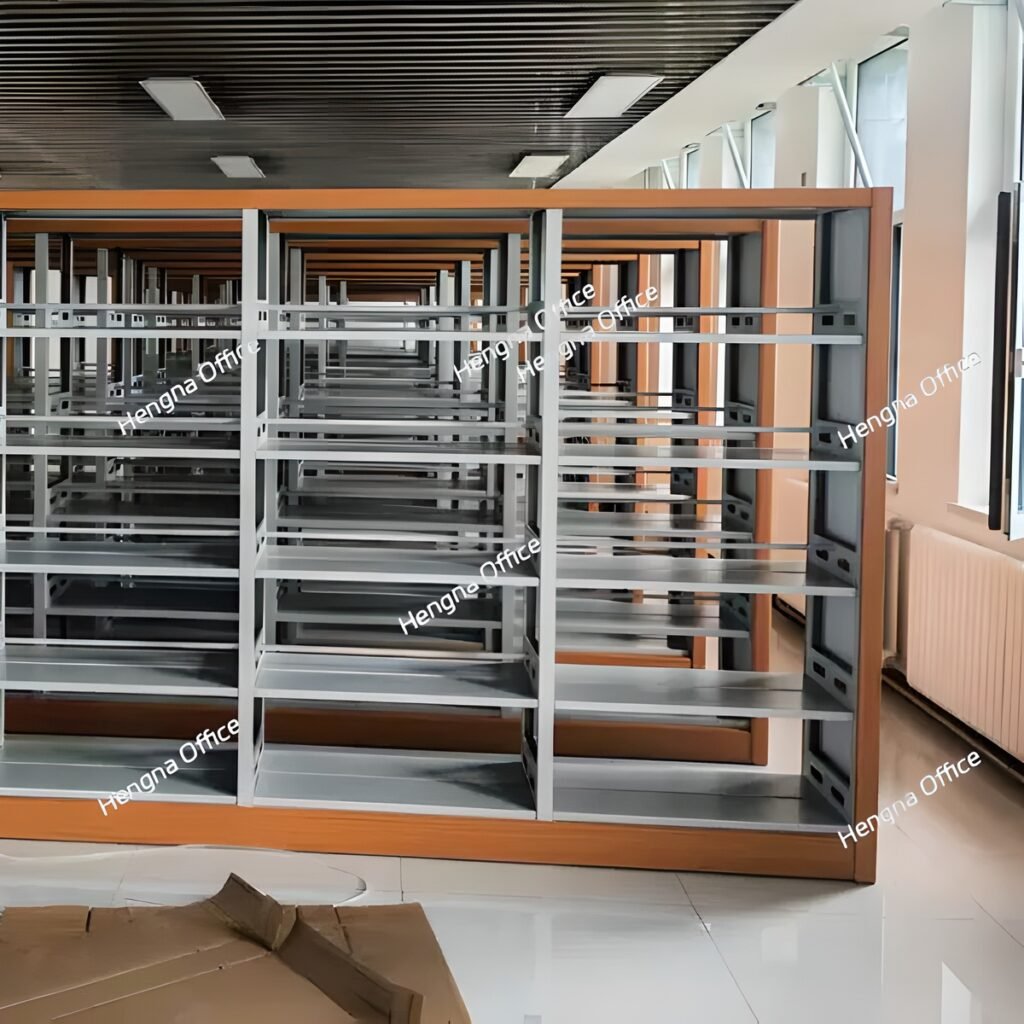
A steel shelf at 0.8mm with formed edges, on a steel frame, rates 80 kg per shelf in our specification — and stays there for decades because steel doesn’t fatigue the way wood does. Wood shelves creep: they deflect more over time even under a constant load. Steel holds its shape.
For libraries that means: art books, bound journals, reference sets, and archival boxes all sit comfortably on a steel unit that looks like a timber bookshelf. The visual warmth of wood, the structural reality of steel.
Where Wood Grain Steel Fits in a Library
Wood-look steel shelves work best in spaces where the design calls for timber but the use demands steel:
- Reading rooms: The warm finish matches wood furniture and flooring while the shelving carries heavy reference collections.
- Children’s sections: High traffic, constant handling, occasional climbing attempts. Steel construction shrugs off what would dent and chip real wood.
- Heritage building interiors: Many older buildings have interior design guidelines that prefer wood tones. Wood grain steel satisfies the look without the fire load of real timber.
- Public libraries in humid climates: Real wood warps in high humidity; wood grain steel doesn’t. The finish is sealed, the substrate is stable.
Fire Performance: A Point Real Wood Can’t Match
Fire codes treat wood shelving as a combustible material — it contributes to fire load and burns with the collection. Steel is non-combustible. In new construction or renovation, specifying steel shelving can simplify fire rating calculations and, in some jurisdictions, satisfy requirements that wood units can’t meet at any thickness.
This is the quiet advantage of wood grain steel: it answers the aesthetic requirement of a design that wants timber, while the engineering answers the code requirement that wants non-combustible. Few products resolve both.
Maintenance Over 10 Years
Real wood shelving costs money over its life: refinishing every 5-7 years in public areas, replacing warped shelves in humid climates, repainting scuffed edges. Wood grain steel needs a damp cloth and occasional touch-up paint on the rare deep scratch.
The transfer coating is bonded, not glued, so there’s no peeling edge to chase. Staff time on shelving maintenance drops to near zero — one less thing for a small facilities team to manage.
How to Verify a Supplier’s Finish Quality
Before ordering wood grain steel shelving, ask for these specifics:
- Coating process in writing: transfer printing vs laminate film
- Base powder coat specification: thickness in microns, curing temperature
- Clear top coat: present or not (it protects the printed pattern)
- Sample panel: request one and test it — scratch it with a key, soak it, bend it at the edge
- Warranty on the finish separately from the frame
- Load rating per shelf in kg, with the finish spec attached
A supplier who can produce a test panel and a written finish spec is working at commercial grade. One who can’t is selling laminate on a good day.
Is Wood Grain Steel Right for Your Library?
If the design brief wants timber, the collection is heavier than paperbacks, or the climate is hard on real wood — wood grain steel answers all three at once. If the project is a small home office with light books, real wood is fine and cheaper. Libraries are not that case.
Send us your shelf dimensions, collection weights, and interior photos. We’ll match the finish tone to your space and quote the load-rated configuration.
Frequently Asked Questions
Does wood grain coating scratch easily?
The transfer-printed finish sits under a clear top coat bonded to the base powder layer — it scratches at about the same resistance as standard powder coating. Everyday handling, bookends, and cart contact don’t mark it. Deep gouges from metal objects can reach the finish, which is why the touch-up paint is worth requesting with the order.
Can the finish be touched up if damaged?
Yes. Suppliers provide matching touch-up paint for deep scratches. Apply, let dry, and the repair blends into the pattern at normal viewing distance. This is a genuine advantage over laminate, which can’t be touched up — a damaged laminate section means replacing the panel.
How does wood grain steel compare in price to real wood?
At comparable construction quality, wood grain steel prices close to solid-wood shelving — within 10-20% in most cases. The lifecycle difference decides it: steel doesn’t need refinishing, doesn’t warp in humidity, and carries heavier loads. Over 10 years, steel is the lower-cost option.
Is the coating safe for indoor office and library use?
The coating system is a standard powder coat plus transfer film, cured at high temperature. It emits no VOCs after curing — the same class of finish used on office furniture sold worldwide. No outgassing, no odor, no special ventilation needed.
Does the finish look obviously fake up close?
Transfer printing reproduces the timber pattern at high resolution, including grain direction and tone variation across the panel. At arm’s length, it reads as wood. The giveaways are the touch — cool and smooth — and the edges, which are crisp steel rather than chamfered timber. Most people notice the difference only when told.
What is the warranty on the wood grain finish?
A quality supplier warranties the finish separately from the frame: 5 years on the coating against peeling, blistering, and color change in normal indoor use. The structural warranty on the frame typically runs 10 years. Get both terms in writing before ordering.