Anti-Tip Filing Cabinets: What Buyers Need to Know Before Purchasing for Schools, Clinics, and Offices
If you’re responsible for purchasing filing cabinets for a school, clinic, or office, you’ve probably heard the term “anti-tip.”
But here’s the reality: most buyers don’t ask about it until something goes wrong.
In 2023, the U.S. Consumer Product Safety Commission (CPSC) recalled a line of filing cabinets because they could tip over when multiple drawers were open at the same time. No injuries were reported, but over 20,000 units had already been sold.
The reason for the recall was simple: no anti-tip design.
This article isn’t here to sell you anything. It’s here to answer one question—what should you check before buying a filing cabinet for a public or commercial space?
Why Anti-Tip Isn’t Optional Anymore
If you’re procuring furniture for schools, hospitals, or government buildings, anti-tip is no longer a “nice-to-have.” It’s a requirement.
Not because a supplier says “our cabinets are stable,” but because safety standards demand it.
In most regions, workplace safety regulations require that tall furniture—filing cabinets included—must either have a built-in anti-tip mechanism or be secured to a wall.
Ask this question upfront: “Does this cabinet have an anti-tip design? Can you provide test documentation?”
That single question eliminates half the products that shouldn’t be in your facility.
Two Types of Anti-Tip Designs (And Which One to Choose)
Option 1: Built-In Anti-Tip Mechanism
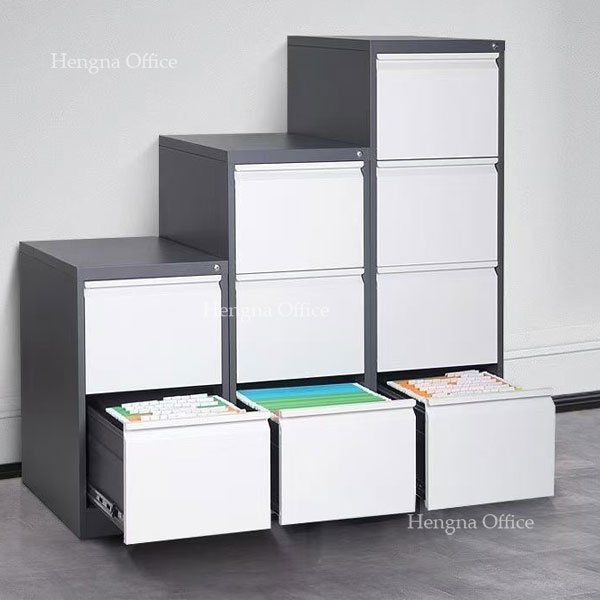
Inside the cabinet, there’s a mechanical device that prevents more than one drawer from opening at a time. When you pull one drawer, the others stay locked.
Advantages: No installation required, doesn’t depend on wall mounting, works even if you move the cabinet
Disadvantages: Slightly higher cost, not all manufacturers offer this
Option 2: Wall Anchor Kit (External Fixing)
The cabinet comes with pre-drilled holes in the back. You use a steel cable or screws to secure it to the wall.
Advantages: Lower cost, widely available
Disadvantages: Requires installation, needs re-installation if you relocate, may not be allowed in rented spaces
Buying recommendation: If your budget allows, go with built-in anti-tip. It’s cleaner, safer, and saves you the hassle of drilling holes.
What About Locks?
Anti-tip is about physical safety. But for clinics, law firms, and HR departments, document security is just as important.
Here’s what to ask:
- “Does it have a central lock system?” (One key locks all drawers)
- “Is the lock a brand-name lock or generic?” (Brand locks usually have better quality control)
- “Can I get replacement keys if I lose one?”
A cabinet with anti-tip keeps people safe. A cabinet with a central lock keeps files safe. For medical records, personnel files, and legal documents, you need both.
Anti-Tip Filing Cabinets|Three Scenarios, Three Different Needs
| Setting | Top Concern | What to Prioritize |
|---|---|---|
| Schools | Student safety | Built-in anti-tip + third-party safety test report |
| Clinics / Hospitals | Privacy + flexibility | Built-in anti-tip + central lock + optional lockable casters |
| Offices | Durability + value | Built-in anti-tip or wall anchor + heavy-duty drawer slides |
Five Questions to Ask Before You Buy
- “Does this cabinet have an anti-tip design? Is it built-in or does it require wall mounting?”
- “Can you provide a third-party safety test report? Which lab tested it?”
- “What’s the weight capacity per drawer? Does it jam when fully loaded?”
- “Is a mobile version available with lockable casters?”
- “Does it come assembled or knock-down?”
Final Checklist
Before you place an order, make sure you have:
- Written confirmation of anti-tip design
- Third-party safety test report
- Weight capacity per drawer (aim for 30kg/66 lbs or higher)
- Central lock specification (one key, all drawers)
- Option for lockable casters if you need mobility
- Assembly status (fully welded vs knock-down)
The Bottom Line
Anti-tip isn’t a marketing feature. It’s a safety requirement.
If you’re buying for schools, clinics, or public spaces, asking “does this cabinet have anti-tip?” isn’t optional—it’s due diligence.
A five-minute conversation with your supplier can prevent a serious accident later.