Wood Grain Steel Bookshelves for Modern Libraries — Timber Aesthetics Without the Fire Risk
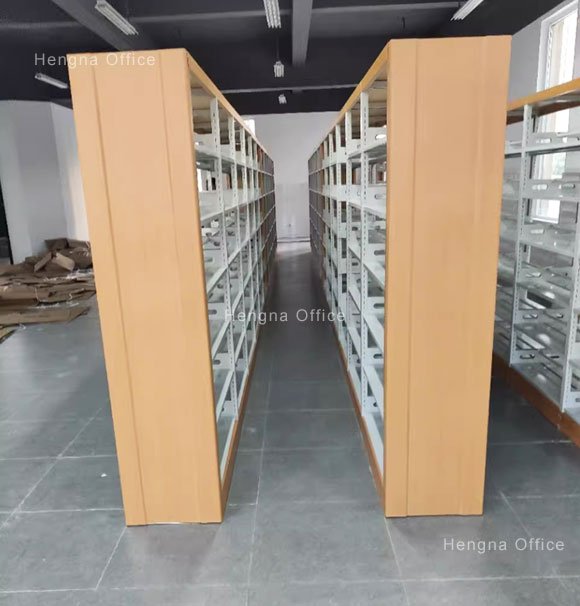
Why Library Design Is Choosing Wood-Look Steel
Library interiors have spent the last decade warming up. The clinical all-steel look of the 2000s gave way to designs heavy on timber tones — wood flooring, wood furniture, warm lighting. But timber shelving brings problems: fire load, humidity warping, and maintenance. Designers who want the look without the issues have landed on wood grain steel.
The finish reads as wood from a meter away. Up close, the surface is cool to the touch and the edges are crisp — details that reveal the material. Done well, that contrast is the point: the warmth of a reading room, the honesty of an engineered product.
The Fire Question That Drives the Specification
Fire codes classify materials by their contribution to fire load. Wood shelving burns with the collection; steel doesn’t. For libraries in multi-storey buildings, heritage conversions, or projects with strict non-combustible requirements, wood grain steel satisfies both the aesthetic specification and the fire specification — one product, two approvals.
Architects designing to international standards (including the common NFPA and IBC frameworks) find this combination rare. The materials that look like timber don’t meet non-combustible requirements; the materials that meet them don’t look like timber. Wood grain steel sits in the gap between those two product families.

Finish Options and How to Match a Space
Wood grain finishes come in a wider range than most specifiers expect:
- Light oak: The workhorse finish. Pairs with pale flooring and Scandinavian-style interiors. Reads neutral in almost any library.
- Walnut and dark tones: For heritage interiors or spaces with dark wood furniture. Warmer, heavier visual weight — good for reading rooms, less good for small spaces.
- Maple and birch: Lighter, more modern. Works with white walls and light wood floors, popular in children’s areas.
- Custom patterns: Transfer printing can replicate a specific timber used elsewhere in the building, matching the shelving to existing furniture precisely.
Match rule of thumb: the shelf finish should sit one shade lighter than the flooring, not the same shade — matching exactly makes the shelving disappear, and contrast makes the space read as designed.
Designing the Layout With Wood Grain Units
Wood grain steel works in the same layouts as any library shelving, with a few design notes:
- Low units at windows: 1200-1500mm tall units don’t block light, and the wood tone complements natural materials near window seats.
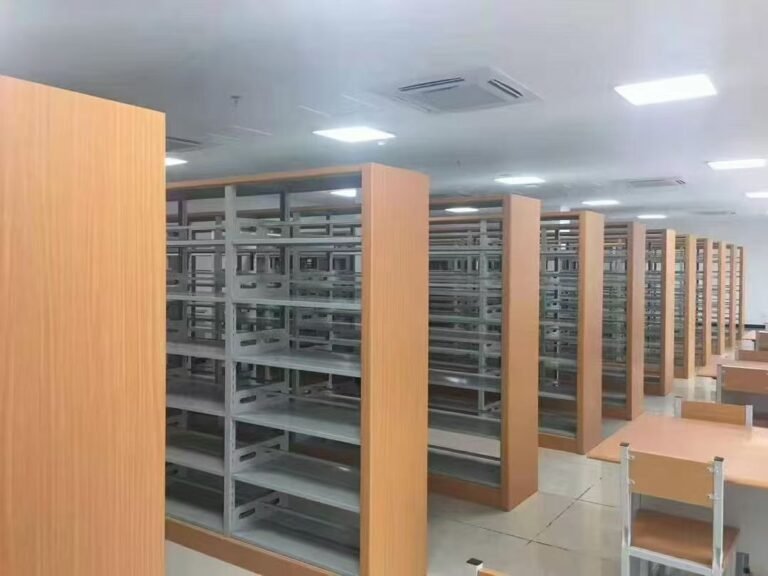
- Tall units against walls: 2000mm+ bays in the same finish read as panelling when the wall behind is white or light — the shelving becomes architectural.
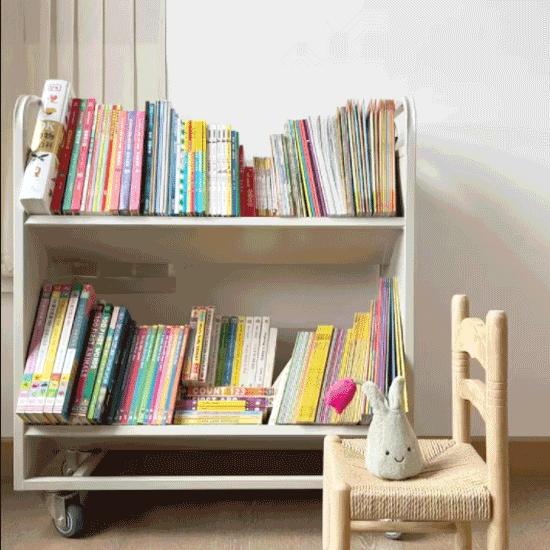
- Mixed heights in children’s areas: Low browsing bins and mid-height shelves in wood tone warm up a space where color and playfulness already dominate.
- End panels as design elements: Specify finished end panels — the exposed side of a bay in the same wood grain — so freestanding runs look like furniture, not racking.
Lighting Interaction: The Detail Everyone Misses
Wood grain finishes absorb and reflect light differently than plain steel. In direct warm lighting, the finish deepens — walnut looks richer, oak looks honeyed. Under cool LED, the same finish reads flatter and greyer.
Practical consequence: choose the finish under the actual lighting of the space, not a showroom sample under different bulbs. Request a sample panel, hold it in the room, and check it at the times of day the space gets used. This one step prevents most finish mismatches.
Realistic Maintenance Expectations
Wood grain steel shelves handle daily library traffic with minimal care. Dust with a dry cloth, wipe occasional marks with a damp cloth, and touch up deep scratches with matching paint from the supplier. There’s no waxing, no refinishing cycle, no seasonal humidity checks — the maintenance schedule is nearly empty.
Compare that to real wood shelving in a public library: scuff marks on the lower panels within months, edge chips from book carts, refinishing every 5-7 years. The lifecycle cost difference is one of the strongest arguments in the specification.
Specifying Wood Grain Steel: The Design Team Checklist
- Confirm the finish is transfer-printed coating, not laminate film
- Request samples in the actual lighting of the space
- Specify finish matching to existing timber elements (one shade lighter than flooring)
- Require non-combustible classification documentation for the steel substrate
- Confirm end panels are finished on all exposed sides
- Load rating per shelf in kg for the chosen configuration
- Warranty: finish separately from frame
Designing a library interior or renovating an existing reading space? Send us your interior photos and dimensions — we’ll provide finish samples and a layout proposal that matches the timber tones in your project.

Frequently Asked Questions
Which wood grain finishes are most popular for libraries?
Light oak leads by a wide margin — it pairs with the pale flooring and Scandinavian tones common in modern library interiors. Walnut runs second for heritage buildings and reading rooms with dark furniture. Maple and birch appear in children’s areas. Custom patterns are rare but available for matching existing timber.
Can the finish match my existing furniture exactly?
Custom transfer patterns can replicate a specific timber used elsewhere in the building. Send the supplier a sample or clear photos of the existing finish, and they can produce panels to match. Allow 2-3 weeks extra for custom pattern work, and always approve a sample panel before production.
Does wood grain steel fade in sunlight?
The clear top coat includes UV stabilizers, so the pattern holds its tone for years in normal window lighting. Direct afternoon sun on the same spot, every day, will eventually lighten any finish — steel included. Library shelving near west-facing windows benefits from the same UV film that protects wood furniture.
Are wood grain steel shelves suitable for children’s libraries?
Very. Children’s areas get the roughest handling — climbing, bumping, marker incidents — and steel shrugs off what dents and chips real wood. The warm finish fits the playful design language. Wipe-clean surfaces handle the marker problem better than any painted wood.
How do I specify wood grain shelving in my RFP?
Require: transfer-printed coating process (not laminate), clear top coat, base powder coat thickness in microns, load rating per shelf in kg, finished end panels, non-combustible substrate documentation, and finish warranty separate from frame. Require a sample panel with the bid — it filters out the laminate sellers instantly.
Can end panels be customized with colors or patterns?
Yes. End panels accept solid colors, different wood tones, or printed graphics — useful for wayfinding or branding in children’s sections. Confirm the customization option before ordering; it’s a production choice, not something added later.