Bookstore Display Shelving — Steel & Wood Units That Move Bestsellers Off the Shelf
Display Shelving Is Not Storage Shelving
A storage bookshelf is judged by capacity. A display unit is judged by how many people stop, pick up a book, and walk to the register. The difference drives every design decision: shelf depth, tilt angle, spacing, and material.
Most bookstores that fail at display do it by buying storage shelving and calling it display. The shelves are too deep for face-out presentation, the heights are uniform when they should vary, and the material says “warehouse” instead of “bookstore.” Customers walk past. The numbers at the register tell the story.
Display shelving does one job: it gets books off the shelf and into hands. Everything else — durability, capacity, price — is secondary to that single outcome.
Front-of-Store vs Back-of-Store: Different Jobs, Different Units
Walk through any profitable bookstore and you’ll notice the shelving changes character between zones. Near the entrance, units are low — 1200mm to 1500mm tall — so arriving customers see the whole display in one glance. Shelves tilt slightly backward, holding books face-out. New releases and staff picks sit at eye level, roughly 1200-1500mm from the floor, because that’s the band where hands reach and eyes land.
Back toward the reference section and the stockroom, shelving gets taller and denser. These areas prioritize capacity. Spine-out storage at 2000mm+ heights, shelves spaced for the specific book sizes in that section. The two zones don’t have to match aesthetically — they have to match their function.
When a store orders shelving, the single most useful question is: which zone is this for? The answer changes the unit completely.
Why the Steel-Wood Combo Works for Bookstores
Pure wood fixtures look warm and bookstore-appropriate. They also warp in humid climates, chip at the corners where shopping bags swing past, and need refinishing every few years. Pure steel fixtures last forever and look industrial — fine for a warehouse, wrong for a reading room.
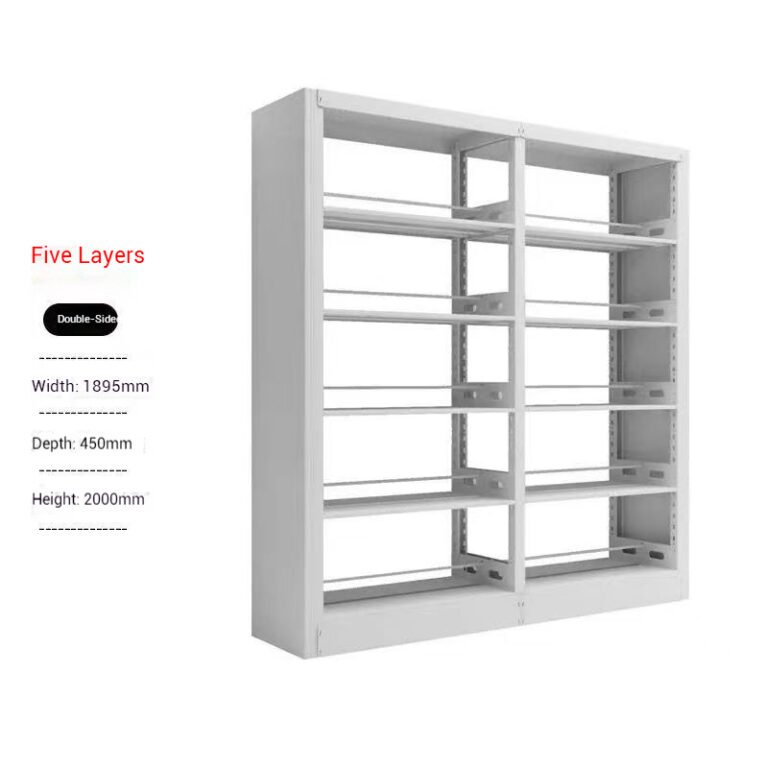
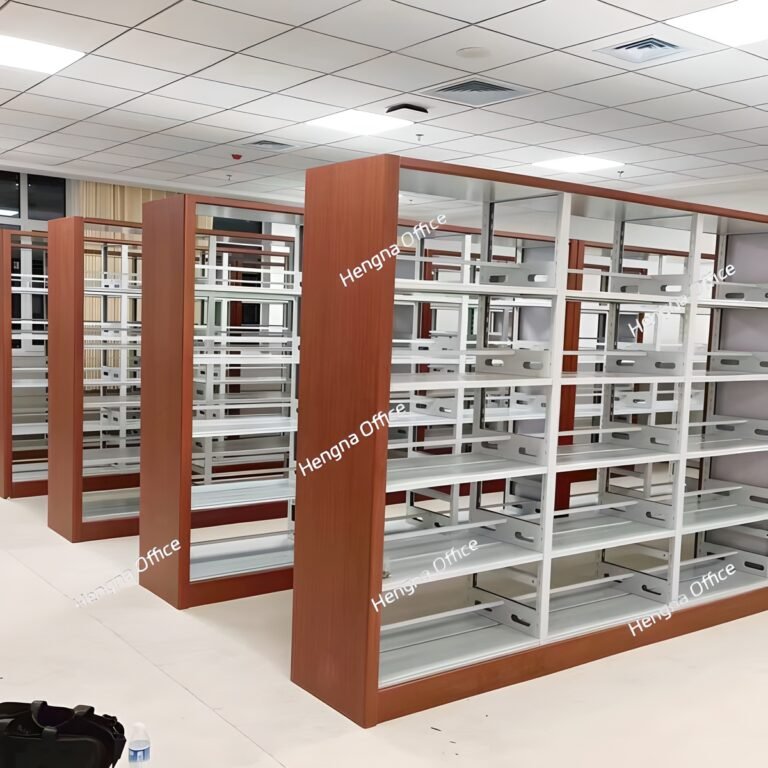
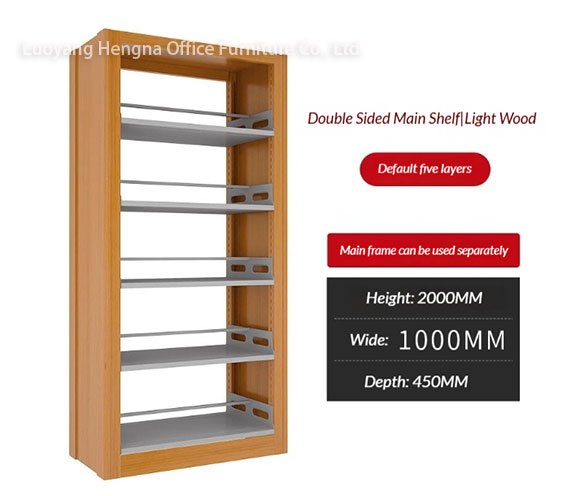
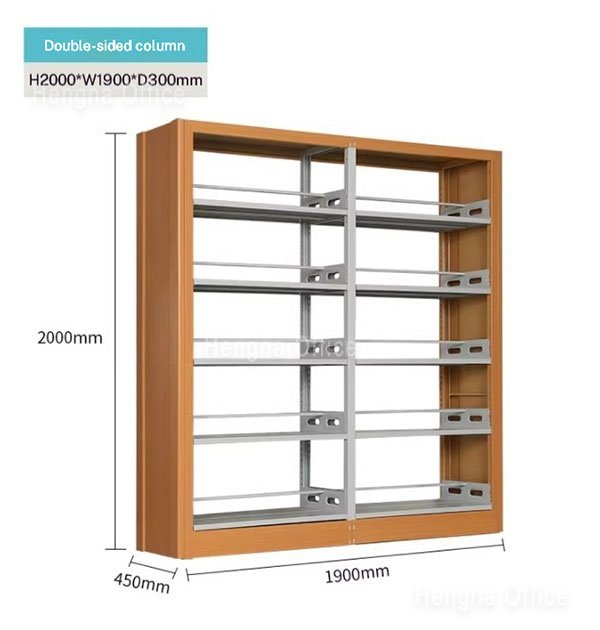
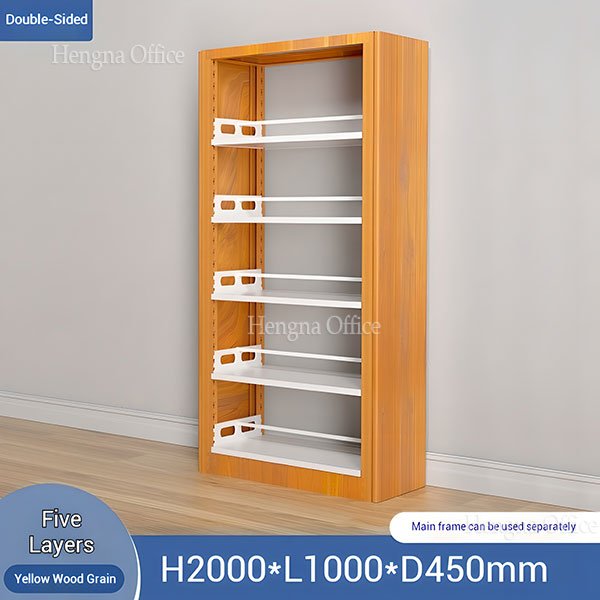
Steel-wood combination units solve both problems. The frame is welded cold-rolled steel with a baked powder coating — it takes the daily abuse of a busy store without showing wear. The shelf surfaces and side panels use a wood-look finish, either real wood veneer over a steel core or a high-definition wood-grain transfer coating on steel.
The result looks like a bookstore and lasts like a warehouse. For stores in coastal or high-humidity regions, the wood-grain steel finish is the more practical choice — it carries the timber aesthetic without the moisture problems of actual wood.
Face-Out vs Spine-Out: What the Shelf Design Allows
Book industry data consistently shows face-out presentation outsells spine-out by a wide margin — in the range of 2-3 times for the same title. The shelf design either enables face-out or blocks it.
Face-out needs three things: a shelf lip low enough that the cover isn’t hidden, a tilt angle of 10-15 degrees so books lean back and stay put, and a depth of 200-250mm — deep enough for the book, shallow enough to discourage stacking two rows deep (which buries the back row).
When you’re reviewing display units from a supplier, ask specifically: does this shelf hold a standard hardcover at face-out without sliding forward? If the lip is too low or the angle too flat, every face-out book will fall over when customers browse. That’s the fastest way to make a display useless.
What a Bookstore Should Ask a Display Supplier
Beyond the standard questions about steel gauge and coating, a bookstore has its own checklist:
- Shelf tilt: Are the display shelves fixed at an angle or adjustable? Adjustable tilt costs more and is worth it if your mix changes seasonally.
- Lip height: Ask for the exact front lip measurement. A 15mm lip holds a face-out paperback; a 40mm lip hides the bottom of the cover.
- Weight rating per shelf: Coffee-table books are heavy. A display shelf rated for 30 kg bows under a full row of art books.
- End panels: Are the sides finished? Freestanding units seen from both sides need finished end panels; wall units don’t.
- Reconfiguration: Can shelf heights change without tools? Stores rearrange displays every 2-3 months.
- Custom sizes: Corner units, curved sections, and odd-width bays — the supplier’s flexibility here determines whether your floor plan works.
Custom Sizes: What They Cost and When They’re Worth It
Standard display units come in a limited set of widths and heights. Most bookstores discover they need something non-standard within the first year — a corner bay, a pillar wrap, a window display at 900mm height.
Custom fabrication typically adds 15-30% over standard units and extends lead time by 2-3 weeks. It’s worth it when the space would otherwise sit empty or when the custom unit anchors the store’s visual identity. It’s not worth it for back-of-store capacity — that’s what standard units are for.
The practical approach: order standard units for the bulk of the store, and budget 10-15% of the shelving investment for custom pieces that solve specific layout problems.
Planning a store refresh or a new opening? Send us your floor plan and which zones you’re fitting. We’ll quote standard display units and flag where a custom piece earns its cost.
Frequently Asked Questions
How deep should bookstore display shelves be?
For face-out displays, 200 to 250mm deep is the working range. Deep enough to hold a standard hardcover flat against the back, shallow enough that books can’t be stacked two rows deep — which buries the back row and defeats the display. Spine-out storage shelves run 300 to 350mm deep. Mix both depths in one unit and you can switch zones as the season changes.
What is the best shelf height for face-out displays?
Eye-level is the money zone: 1200 to 1500mm from the floor. New releases, staff picks, and high-margin titles go there. Below 800mm, displays work best tilted — customers see the covers from above. Above 1600mm, face-out presentation stops earning its space; switch to spine-out storage for the top shelf.
Are steel display units more expensive than wood?
Comparable upfront, cheaper over time. A steel-wood unit and a solid-wood unit of similar size price within 10-15% of each other. The difference is lifecycle: wood needs refinishing every 5-7 years in store traffic, steel-wood needs none. Over 10 years, the steel unit is the cheaper purchase even at a slightly higher first price.
Can existing wood fixtures be replaced piece by piece?
Yes, and it’s usually the smart way to refresh a store. Replace the busiest display zones first — the front table area and the bestseller wall — with steel-wood units, and keep the older wood fixtures in the back sections until they wear out. The two materials coexist fine visually when the finish tones are matched.
Do display shelves hold heavy coffee-table books?
Specify it. A standard display shelf rated for 30 kg will bow under a full row of art books, which weigh 2-3 kg each. Ask for 50 kg rating on the lower shelves where oversized books sit. The supplier can reinforce those shelves at a small premium.
How many display units does a small bookstore need?
Work backwards from the front zone: the first 15 square meters near the entrance should be entirely face-out display, which typically means 4-6 display units of 900-1200mm width. That’s the zone that converts browsing into sales. Beyond it, standard shelving carries the depth of the inventory.