
V-Shaped Library Book Cart with Locking Casters — Carry Twice the Books, Park It Anywhere
I watched a library assistant shelve books for a while one morning, and it was the cart that caught my eye. She had it wedged between two stacks, pushed a button on one caster, and the whole thing stayed put while she loaded a shelf with both hands. When the section was done, she tapped the release, rolled it down the aisle, and parked it beside the next shelf. No kick stand, no leaning it against the stack, no hands holding it steady. That cart is what this guide is about.
This covers what a V-shaped library book cart with locking casters actually does, how the shape lets it carry more books than a flat cart, and what to check before you buy one for a library, an archive, or a bookstore. If you’re tired of carts that tip, roll away, or hold half what you need, this is the practical version of what to get instead.
Why the V shape carries more
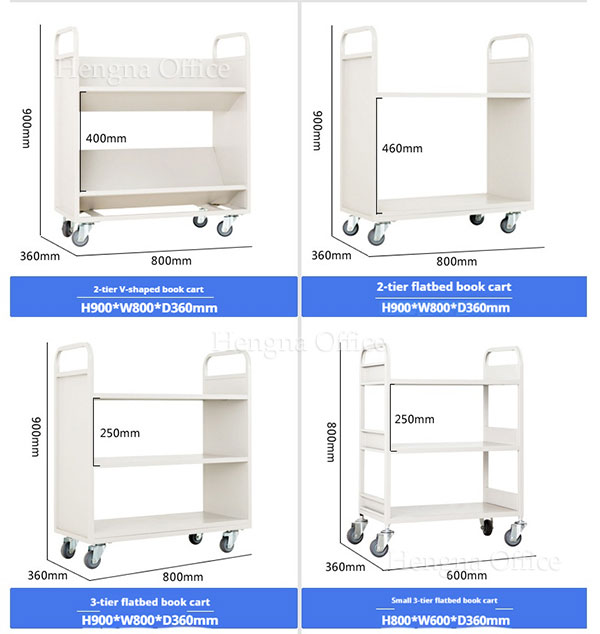
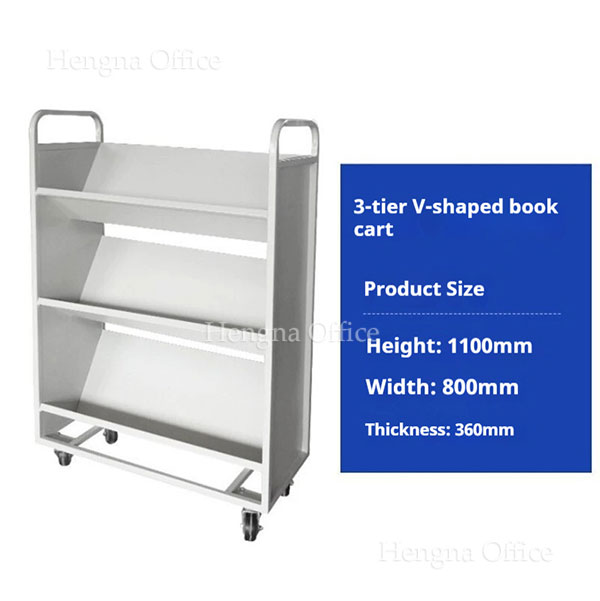
A flatbed book cart stacks books in a single layer, so you get a lot of wasted height. A V-shaped cart slopes the shelves inward, letting books rest on their sides or leaning at an angle, which packs far more into the same footprint. Two V shelves can hold roughly what three or four flat shelves hold, because the books tuck into the angle instead of lying flat and filling the height with air.
That’s where “carry twice the books” comes from. The V design captures both the slope and the back-and-side support, so books stay put even when the cart is moving. It’s the difference between making two trips across a library and making one. For a busy assistant shelving all day, that’s real time saved.
Locking casters: why “park it anywhere” matters
Most book carts roll, but few lock. A cart with locking casters gives you something a rolling cart can’t: a stable loading platform. Press the lock on one or two casters and the cart stays put while you load a shelf, pull a book, or restock a bay — no hands needed to hold it. Release and it rolls again.
That matters in a library for three reasons. First, safety: a locked cart won’t roll into a passerby or a child. Second, efficiency: you can park it exactly where you’re working and load with both hands. Third, control: locking casters keep the cart where you left it on slopes, on smooth floors, and between stacks. A cart you can park is a cart that works for you instead of against you.
V-shaped cart vs. flatbed cart
| Factor | V-shaped book cart | Flatbed book cart |
|---|---|---|
| Capacity | Higher — books tuck into the slope | Lower — single flat layer |
| Book support | Back and side support hold books | Books can slide without edges |
| Trips per load | Fewer — carry more per trip | More trips |
| Locking casters | Available, park anywhere | Available on better models |
| Best for | Active shelving, high volume | Light transport |
My honest take: for a library or archive where staff shelve all day, a V-shaped cart with locking casters is the efficient choice — more books per trip, and it stays where you park it. A flatbed cart is fine for light, occasional transport, but it makes every shelf-loading task harder and slower.
How a good book cart is built
A cart that lasts is about the frame, the finish, and the wheels. Look for a steel frame that won’t flex under a full load, a powder-coated finish that resists the scuffs a busy aisle hands out daily, and smooth rolling casters with a solid lock. The handle should be comfortable to push, and the shelves should have edges or guides that keep books from sliding off when the cart turns.
- Steel frame — carries the load without bowing or twisting.
- Powder-coated finish — resists scratches and rust in daily use.
- Locking casters — park it anywhere, load with both hands.
- Shelf edges or guides — keep books from sliding off on turns.
- Comfortable handle — easy to push even when fully loaded.
Those five details are what separate a cart that lasts a decade from one that wobbles within a year. Steel and powder coating are the durability backbone; the casters and shelf design are the daily usability.
What to check before you order
- Real load capacity — get a number for how many books a tier holds, not just “heavy duty.”
- Caster locks — confirm the casters actually lock (brake style), not just roll.
- Steel thickness and finish — a solid frame and powder coating resist the daily grind.
- Shelf edges — raised edges or guides keep books from sliding on turns.
- Dimensions — height, width, and depth must fit your aisles and doorways.
- Wheel quality — smooth-rolling casters that don’t catch on floor joints.
- Handle comfort — a handle you can push comfortably when the cart is full.
Using it well in a library
A V-shaped cart works best when you use it with the aisle in mind. Park it perpendicular to the shelf you’re loading so the open side faces you, lock the casters, and shelve with both hands. Load heavier books toward the bottom tier to keep the cart stable, and spread the load evenly so it doesn’t tip on a turn. When you move between sections, unlock, push, and re-park — it’s a rhythm that makes shelving noticeably faster.
One habit worth building: lock the casters every time you stop, even for a second. It costs nothing, and it’s the single thing that keeps a busy cart from rolling away mid-task or into someone walking past.
FAQ
Does a V-shaped cart really hold twice the books?
Compared to a flatbed of the same footprint, yes, in most cases. The sloping shelves pack books in at an angle, so more books fit per level.
How do locking casters work?
Most use a brake on the wheel or a lever that locks the swivel. Press it and the cart stays put; release and it rolls freely.
Is a V-shaped cart stable when fully loaded?
Yes, when the load is spread evenly and heavier books go on the bottom tier. The V shape and a solid steel frame keep it balanced.
Can one person use it comfortably?
Yes. Lock the casters to park, load and unload with both hands, then release and push. A well-designed cart is made for one assistant.
What size cart fits a standard library aisle?
Check the cart’s width and depth against your aisle width. A typical book cart around 800 mm wide fits most library aisles; confirm your own doorway clearance.
Why buy from us
We supply these V-shaped library book carts direct from partner production lines. That means we control the steel frame, the powder coating, and the locking caster quality from raw material to finished unit — and it means pricing that works for libraries, archives, and bookstores buying in quantity. If you’re outfitting a library or updating your shelving fleet, we can quote a unit or a full order.
Tell us your aisle width and how many books you move in a day, and we’ll size a cart that carries more and stays put when you need it to.
I watched a library assistant shelve books for a while one morning, and it was the cart that caught my eye. She had it wedged between two stacks, pushed a button on one caster, and the whole thing stayed put while she loaded a shelf with both hands. When the section was done, she tapped the release, rolled it down the aisle, and parked it beside the next shelf. No kick stand, no leaning it against the stack, no hands holding it steady. That cart is what this guide is about.
This covers what a V-shaped library book cart with locking casters actually does, how the shape lets it carry more books than a flat cart, and what to check before you buy one for a library, an archive, or a bookstore. If you’re tired of carts that tip, roll away, or hold half what you need, this is the practical version of what to get instead.
Related Reading
- How to Buy Steel Library Shelving from China in 2026
- Steel Library Shelving for Universities — school and classroom furniture
- 5 Key Factors for International Buyers When Sourcing Metal
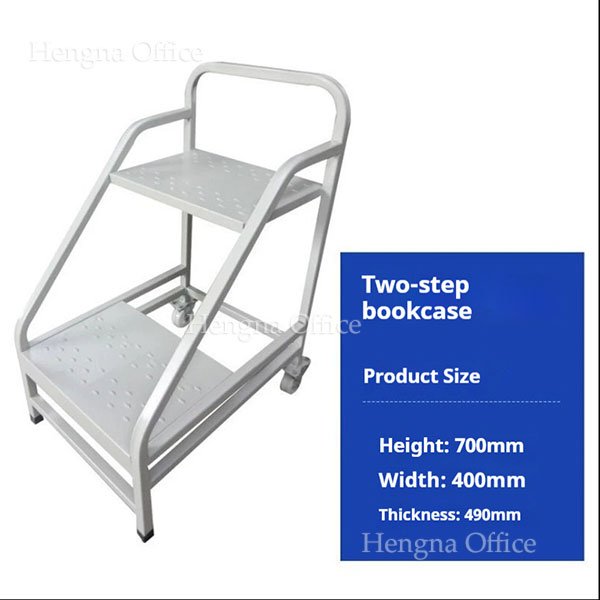
- 700mm Height Rolling Library Stepladder Cart
- Custom Steel Book Trolleys
Browsing by need rather than by model? Start from library shelving or heavy-duty load ratings.


5 Comments